Brazil is the world's largest soybean exporter. In most years, it ships substantially more than half of globally traded soybeans from its two main export corridors: Santos on the southern coast and Paranagua slightly further south. When logistics at these two ports strain under the weight of the harvest, the effects reach landed soybean prices in China, the EU, Southeast Asia, and any other destination that pulls from Brazilian origin supply.
For procurement teams buying soy products (soybeans for crushing, soybean meal for feed, soybean oil for food processing), understanding where Brazilian export chain disruptions come from and what their price consequences look like is directly relevant to forward procurement planning.
The Brazilian Export Corridor: How It Actually Works
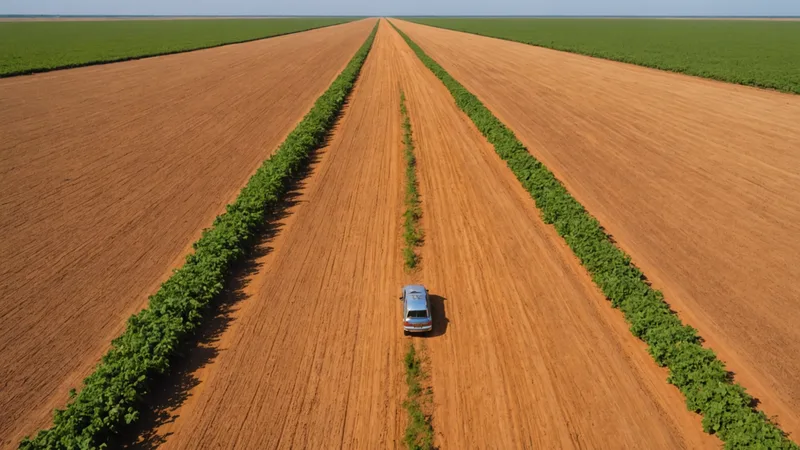
Most Brazilian soybeans move from farm gate in Mato Grosso (Brazil's dominant producing state, located in the interior center-west) to export ports via a combination of road, rail, and river transport. The road network is the dominant mode, which creates both the corridor's efficiency and its vulnerability.
The BR-163 highway, running roughly north-south through Mato Grosso and Para, is the primary overland artery for soybean movement from the interior to river transshipment terminals on the Amazon system or to rail connections heading south toward Santos and Paranagua. This highway has historically been a bottleneck: inadequate pavement quality on sections, limited passing lanes for heavy trucks, and seasonal flooding during the Brazilian summer rainy season (which coincides with the soy growing season, roughly November through March).
Infrastructure investment has improved portions of the BR-163 corridor in recent years, and river port development in Para has added capacity north of the traditional southern corridor. But the corridor remains capacity-constrained relative to the volume Brazil now produces. When harvest comes fast, as it does in La Nina years when the central-west experiences drier conditions and an accelerated maturation window, the transport system gets stressed rapidly.
Port Congestion: What Causes It and How Long It Lasts
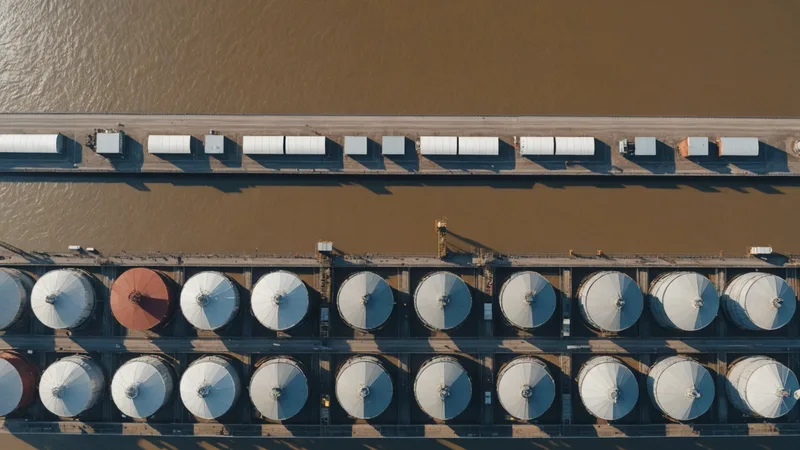
Congestion at Santos and Paranagua develops when vessel arrivals accumulate faster than berths can load them. The causes are predictable: harvest arrives in a compressed window, trucks arrive at the port terminals faster than terminal storage can absorb them, and vessel queues form outside the port, with charter parties accumulating demurrage charges. During peak congestion periods, vessels can wait several days at anchor before berthing.
The congestion period typically runs from February through April, aligning with the main harvest and export push. The duration and severity in any given year depend on harvest timing (an early harvest concentrates export demand; a late harvest spreads it), vessel availability (if the global bulk fleet is already committed to other trades, congestion worsens), and port handling efficiency.
For buyers holding vessel nominations into congested ports, the financial consequence is measurable. Demurrage is charged at a daily rate against the charterer for each day the vessel waits beyond the contractual laytime. On a Panamax loading 70,000 metric tons of soybeans at a standard demurrage rate, even a few extra days waiting at anchor represents significant additional cost on top of the cargo value.
Price Consequences at Destination Markets
When the Santos and Paranagua export corridor experiences disruption, the price effect at destination markets depends on the disruption's duration and the ability of buyers to substitute other origins.
For a buyer in Northern China or Southeast Asia, the practical alternatives to Brazilian origin soybeans are primarily US Gulf origin (during the US harvest window, October through December) and Argentine origin (Argentine soybean crop runs roughly one month behind Brazil in harvest timing). If Brazilian export delays are severe enough to create a physical supply gap at destination in a window when US and Argentine supply is not yet flowing, spot prices at destination can react sharply.
The freight market also reflects Brazilian export corridor conditions. When Santos and Paranagua experience congestion, Panamax vessels waiting at anchor effectively leave the global bulk fleet temporarily unavailable. This reduces available tonnage in the Atlantic basin, which can push up Panamax rates on routes that have nothing to do with Brazilian soybeans. Procurement teams buying other dry bulk commodities are affected by the congestion they never see directly.
How to Track the Early Warning Signals
The key data inputs for monitoring Brazilian soybean export disruption risk are not exotic. They are publicly accessible but require consistent attention during the harvest and export season.
Vessel tracking data (available through AIS platforms that aggregate ship position broadcasts) shows how many vessels are at anchor outside Santos and Paranagua at any given time, and what the average wait time is. A rising anchor count in February is a leading indicator of congestion building. USDA WASDE reports and Brazil's CONAB (the government's crop forecasting agency) provide the crop production estimates that determine how much volume will be pushing through the corridor in a given season. Brazilian state road agencies and logistics trade press provide information on truck queues and road conditions on the main BR-163 corridor.
Integrating these signals with commodity price forecasting requires connecting the physical logistics state to the price consequence, which is not a simple linear relationship. A congestion event that delays exports by two weeks has a different price effect depending on whether destination inventories are tight, whether alternative origins are available, and whether the delay is expected to clear quickly or persist.
We do not claim to predict Brazilian port congestion with precision weeks in advance. What we can do is track the leading indicators that correlate with congestion events, and flag elevated disruption risk earlier than a team monitoring only commodity futures screens would see it.
Implications for Forward Procurement Timing
The practical implication for procurement teams that depend on Brazilian soybean supply is that the period from late January through late April represents a structurally elevated logistics risk window. During this window, the decision of when to price forward purchases, and how much of the year's volume to cover before versus after the congestion period, is meaningfully affected by the export corridor's condition.
A procurement team with a forward view of Brazilian harvest timing, port congestion indicators, and their interaction with landed price at destination has better information than a team watching spot prices at the destination port alone. The spot price reflects congestion after the fact, when the price has already moved. The logistics and harvest indicators tell you something about congestion risk before the price moves.
This is one of the specific reasons the Helios AI supply-risk model includes freight as a dedicated signal rather than treating it as a commodity-price afterthought. For soybean procurement specifically, the freight and logistics component of landed cost risk is not a minor footnote: it is a core driver of procurement outcomes during the most critical pricing windows of the calendar year.